NDT in the aerospace industry
时间:2019-11-11 11:36 来源:未知 作者:admin 点击:次
How essential is nondestructive testing (NDT) to airplanes?
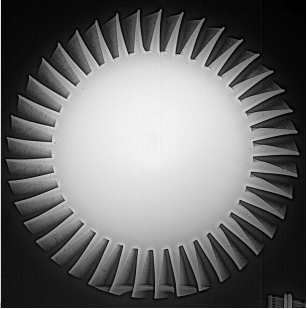 Aircraft turbine blade In the aerospace industry, as with other transportation industries, NDT can make the difference between life and death. Aircraft components are inspected before they are assembled into the aircraft and then they are periodically inspected throughout their useful life. Aircraft parts are designed to be as light as possible while still performing their intended function. This generally means that components carry very high loads relative to their material strength and small flaws can cause a component to fail. Since aircraft are cycled (loaded and unloaded) as they fly, land, taxi, and pressurize the cabin, many components are prone to fatigue cracking after some length of time. If you are unfamiliar with the term "fatigue cracking" think about what happens when you bend a paper clip or piece of wire back and forth ...eventually it will break. Even parts that are loaded well below the level that causes them to deform can develop fatigue cracks after being cycled for a long time. This is what happens in aircraft. After they are used for a while, fatigue cracks start growing in some of their parts. Cracking can also occur due to other things like a lightning strike. Aircraft have some protection against lightning strikes but occasionally they occur and can results in cracks forming at the strike location like the one shown in the picture. Another problem that aircraft have is that they are under the constant attack of corrosion. When an aircraft lands and the door is opened, the inside of the plane often fills with warm moist air. When the plane takes flight, and reaches altitude, the skin of the aircraft becomes very cold due to the temperature of the outside air. This cause the moisture held by the air inside the cabin to condense on the inside of the aircraft skin. The water will collect at low areas and serve as the electrolyte needed for corrosion to occur. The good news is that aircraft are designed to withstand a certain amount of damage from cracking and corrosion without cause for concern, and NDT inspectors are trained to find the damage before it becomes a major problem. The rigorous process used to design aircraft either allow for a certain amount of damage to occur before a part fails, or in many cases, a part can fail completely and performance of the aircraft will not be affected. The job of the NDT inspector is to find the damage while it is within acceptable limits. (责任编辑:admin) |
- 上一篇:Some techniques commonly used by NDT/NDE
- 下一篇:Non-destructive testing industrial radiographic film