Non-destructive testing of pressure equipment-2
时间:2019-12-06 16:53 来源:未知 作者:admin 点击:次
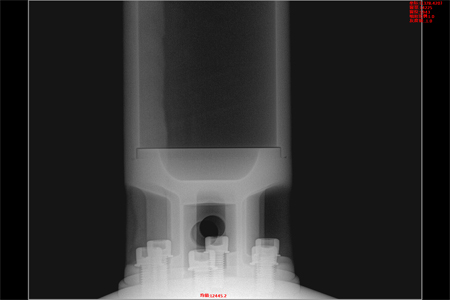 Class A and AB radiographic techniques should use C6 or higher film, and Class B radiographic techniques should use C4 or higher film. When using γ-rays and high-energy X-rays for radiographic testing, and for radiographic testing of high-strength materials with a lower limit value of standard tensile strength Rm ≥ 540MPa, films of category C4 or higher should be used. Appropriate http://www.dr-hatatest.com/include/FCKeditor/editor/images/spacer.giftransillumination methods should be selected according to the requirements of working characteristics and technical conditions. Where possible, single-wall transillumination should be preferred, and double-wall transillumination is only permitted when single-wall transillumination cannot be performed. Transillumination direction: In the transillumination, the center of the ray beam should generally point vertically to the center of the transillumination area and should coincide with the normal of the surface of the workpiece. If necessary, transillumination can be used in a direction that is conducive to finding defects. One transillumination length: (B) Fillet welds on sockets, elliptical heads, and small γ-area welds on disc-shaped heads, as well as other welds with continuously changing curvature, may not use the K value to determine the length of a single transillumination. Blackness is allowed. Range to determine the length of a transillumination. Allowable transillumination thickness ratio K 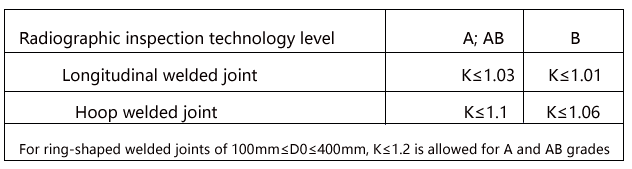 (责任编辑:admin) |